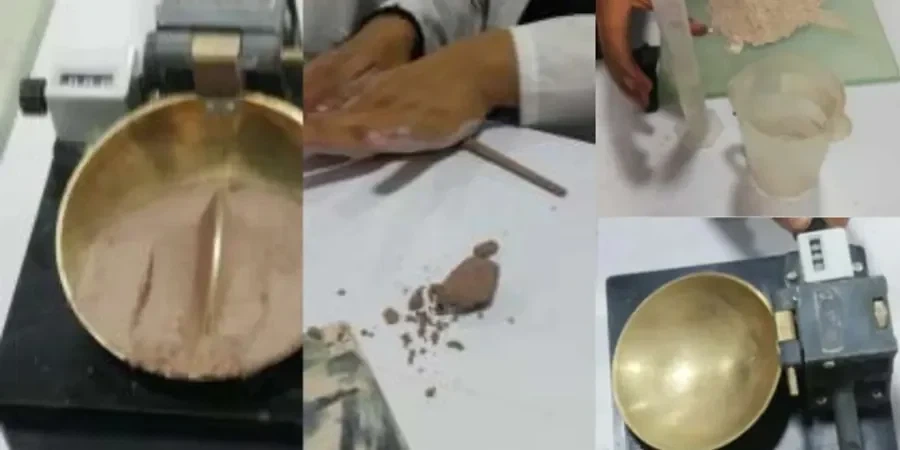
Riverside sits at an elevation of 827 feet in the Santa Ana River valley, where soils range from sandy river deposits to high-plasticity clays from ancient lakebeds. These clays shrink and swell with moisture changes, creating real risks for slab-on-grade foundations. Atterberg limits testing tells us exactly how reactive the soil is. We run the liquid limit, plastic limit, and calculate the plasticity index to classify the soil under the Unified Soil Classification System (USCS). For cut slopes in Riverside, we pair this data with a stability analysis to check if the clay will lose strength when wet. Our lab follows ASTM D4318-17 to the letter.
A plasticity index above 35 in Riverside clays means high swell potential — slab reinforcement and moisture barriers become essential.
Method and coverage
We see a lot of construction sites in Riverside where the topsoil looks like sand but the clay layer two feet down has a plasticity index above 40. That's a problem. Atterberg limits catch it before the slab is poured. Our process:
Air-dry the soil sample and break up clods.
Wash through a No. 40 sieve to remove coarse particles.
For liquid limit: run the Casagrande cup method with three or more trials.
For plastic limit: roll threads to 1/8 inch diameter until they crumble.
Calculate PI = LL - PL and classify per ASTM D2487.
We also record the natural moisture content to see how close the soil is to its plastic limit in the field. That tells us if the ground has room to shrink or swell. When Riverside projects involve road subgrades, we connect Atterberg data with CBR testing to decide if the clay needs lime stabilization.
Technical reference image — Riverside
Regional considerations
A common mistake in Riverside: builders see dry, hard soil at the surface and assume it's stable. They skip Atterberg testing. Then winter rains hit. The clay absorbs water and expands, cracking garage slabs and tilting patio foundations. Without the plasticity index, nobody knows the soil's shrink-swell potential. We've seen houses with floor heave of up to three inches because the clay was actually a high-plasticity CH soil with a PI of 50. That's a structural fix costing tens of thousands. Atterberg limits are cheap insurance against that kind of damage.
What is the difference between liquid limit and plastic limit?
The liquid limit is the moisture content at which soil changes from plastic to liquid behavior — measured with the Casagrande cup at 25 blows. The plastic limit is the moisture content where soil crumbles when rolled into a 1/8-inch thread. The difference between them is the plasticity index, which tells you how much the soil can swell or shrink.
How much does Atterberg limits testing cost in Riverside?
Our standard Atterberg limits test (liquid limit, plastic limit, and plasticity index) runs between $60 and $90 per sample. Full USCS classification with grain-size analysis adds about $50. Volume discounts apply for multi-sample projects.
Why does Riverside clay require Atterberg testing before construction?
Riverside has expansive clays from ancient lake deposits that can swell up to 20% when wet. Without Atterberg limits, you don't know the plasticity index. A PI above 35 means high shrink-swell potential, which directly affects foundation type, slab reinforcement, and moisture barrier requirements under IBC 2021.