Together, we solve the challenges of tomorrow.
READ MORE →Geotechnical laboratory testing forms the backbone of every successful civil engineering and construction project in Riverside, California. This category encompasses a comprehensive suite of physical and mechanical tests performed on soil and aggregate samples to determine their engineering properties, behavior under load, and suitability for intended construction purposes. From foundational soil mechanics study evaluations to specialized strength assessments, laboratory analysis provides the quantitative data engineers require to design safe, stable, and economical structures. In a region marked by diverse geological formations and significant seismic considerations, accurate laboratory data is not merely a regulatory checkbox—it is a fundamental necessity for risk mitigation and long-term structural performance.
Riverside's geological setting presents unique challenges that underscore the importance of thorough laboratory investigation. The city sits within the Inland Empire basin, characterized by complex alluvial fan deposits, residual granitic soils from the nearby Box Springs and Santa Ana Mountains, and localized zones of expansive clay soils. These alluvial sediments, transported from surrounding highlands, can exhibit significant variability in grain size distribution, from coarse gravels to fine silts and clays, often within a single project site. The presence of potentially expansive smectite clays, particularly in the older alluvial terraces, demands precise identification through Atterberg limits testing to predict shrink-swell behavior that can compromise light structures, pavements, and utilities. Furthermore, the region's proximity to active fault systems, including the San Jacinto and Elsinore faults, necessitates rigorous strength and deformation testing to comply with seismic design requirements.
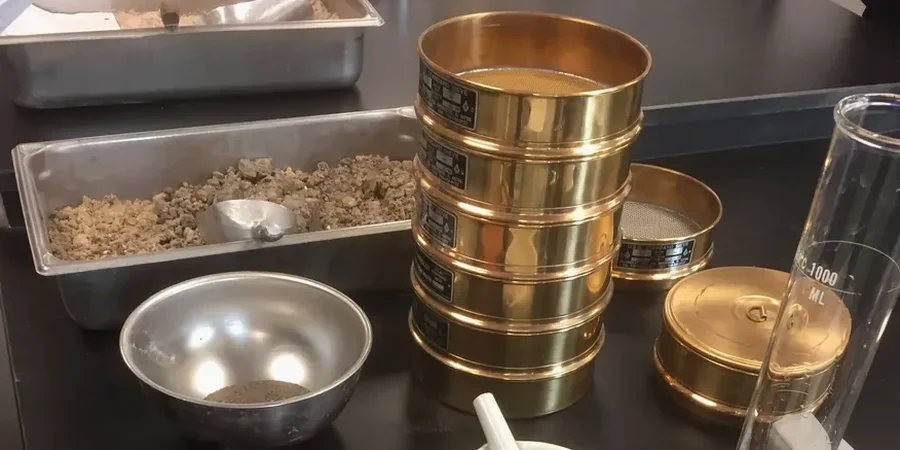
Compliance with national standards is mandatory for all laboratory testing performed for projects in Riverside. The American Society for Testing and Materials (ASTM) provides the primary framework, with specific standards governing each test method. The Proctor test (Standard or Modified), for instance, follows ASTM D698 and D1557 respectively, establishing the moisture-density relationship critical for compaction control during earthwork. Similarly, the direct shear test adheres to ASTM D3080 to determine drained shear strength parameters, while grain size analysis follows ASTM D6913 for sieve analysis and D7928 for hydrometer sedimentation. California-specific adaptations, such as Caltrans Test Method 216 for the laboratory CBR test, are frequently invoked for roadway and pavement design projects under local agency jurisdiction. These standardized procedures ensure consistency, repeatability, and legal defensibility of the data used in geotechnical reports submitted for permit approval.
The range of projects requiring comprehensive laboratory testing in Riverside is extensive. Residential subdivisions on hillside terrain demand direct shear testing to evaluate slope stability and design retaining structures. Commercial warehouse developments in the flatlands require laboratory CBR values for flexible pavement thickness design and Proctor curves for controlled fill placement beneath floor slabs. Infrastructure projects, including the expansion of the State Route 91 corridor and local arterial improvements, rely heavily on grain size analysis and soil classification to assess subgrade suitability and drainage characteristics. Public works facilities, such as the Riverside Water Quality Control Plant expansions, necessitate detailed soil mechanics studies to address settlement, bearing capacity, and earth pressure calculations. Even post-disaster assessments following seismic events or flood damage frequently involve laboratory verification of altered soil properties before reconstruction can proceed.
For residential projects, the scope depends on the site conditions and local jurisdiction requirements but commonly includes Atterberg limits to assess expansive potential, a Proctor test for compaction specification, and grain size analysis for foundation drainage design. If the site has slopes or requires retaining walls, a direct shear test for strength parameters is also standard. A soil mechanics study integrates these results to deliver foundation recommendations and address seismic hazards per California Building Code.
Standard index tests like grain size analysis and Atterberg limits can be completed within 3 to 5 business days. Tests requiring sample curing or multiple stages, such as direct shear or laboratory CBR, typically require 7 to 14 days. A comprehensive soil mechanics study incorporating multiple test types generally has a turnaround time of two to four weeks, depending on the testing queue and the complexity of the required analyses.
The Standard Proctor (ASTM D698) uses a 5.5-lb hammer dropped 12 inches to compact soil in three layers, simulating lighter compaction effort typical of small equipment. The Modified Proctor (ASTM D1557) employs a 10-lb hammer dropped 18 inches in five layers, representing the higher effort of modern heavy rollers. Riverside projects with significant structural loads, major pavements, or Caltrans jurisdiction typically require the Modified Proctor, while standard effort may suffice for landscaping or minor residential fills.
Field tests deliver valuable index estimates and continuous profiling but cannot replace the precision and controlled conditions of laboratory testing. A direct shear test yields drained cohesion and friction angle values essential for slope stability analysis, while a laboratory CBR test provides the definitive soaked strength for pavement design. Laboratory tests also allow for sample conditioning, precise moisture control, and correlation with index properties like Atterberg limits, forming a legally defensible basis for engineering recommendations.